How Does a Sleep Study Work? What to Expect Before, During and After
A sleep study is a diagnostic test used to monitor what happens while you sleep. It can provide important information about breathing, oxygen levels, heart rate, body position and other sleep-related measurements. Sleep studies are commonly used when symptoms suggest a sleep disorder such as obstructive sleep apnoea.
Knowing what happens before, during and after a sleep study can make the process easier to understand. Depending on your symptoms and clinical assessment, testing may be completed at home or in a supervised sleep laboratory.
At Coastal Respiratory & Sleep Specialists, we provide sleep studies as part of our respiratory and sleep medicine services. Understanding the process can help you know what to expect and when a specialist assessment may be appropriate.
What Is a Sleep Study?
A sleep study, also known as a sleep test or polysomnography, records physiological information while you sleep. The information collected can help a sleep physician identify breathing abnormalities and other sleep-related problems.
The type of test recommended depends on your symptoms, medical history and the clinical question being investigated. A home study may be suitable for many people, while a laboratory study may be recommended when more detailed or supervised monitoring is needed.
Why Is a Sleep Study Recommended?
A sleep study may be recommended when symptoms indicate that breathing or sleep quality could be affected by an underlying condition. Common reasons for testing include persistent snoring, witnessed pauses in breathing, gasping during sleep or unexplained daytime tiredness.
Your GP or treating specialist may recommend a study before or alongside a specialist assessment. A sleep medicine consultation can also help determine which investigation is appropriate based on your symptoms and health history.
What Happens Before a Sleep Study?
Preparing for a sleep study is generally straightforward. The exact preparation depends on whether you are completing the test at home or attending a laboratory. Before testing, you may receive instructions about collecting equipment, your usual medications and your normal sleep routine.
At Coastal Respiratory & Sleep Specialists, the process begins with an appropriate referral and assessment pathway. A referral from a GP or specialist may be required depending on the service and testing circumstances.
Getting Ready for Your Test
Before your appointment, it can be useful to keep your usual routine unless your healthcare team gives you different instructions. You should also make sure the clinic has relevant information about your medications and medical history.
Consider the following before your study:
- Follow the instructions provided by the clinic.
- Take regular medication as directed unless your healthcare professional advises otherwise.
- Avoid changing your normal sleep schedule unnecessarily.
- Bring any requested paperwork or referral information.
- Ask about anything you are unsure about before collecting or using the equipment.
If you have questions about whether testing or a sleep medicine consultation is appropriate, discuss your symptoms with your GP or treating healthcare professional.
How Does a Home Sleep Study Work?
A home sleep study allows you to complete overnight monitoring in your own bed. It is commonly used to investigate breathing-related sleep disorders, particularly obstructive sleep apnoea. The equipment records selected physiological measurements while you sleep.
Coastal Respiratory & Sleep Specialists provides home sleep studies, with equipment set up by a technician before the patient takes the device home. The recorded information is then analysed and reviewed by a Sleep Physician.
Collecting the Equipment
You will attend an appointment where a trained technician explains how the equipment works and helps you understand how to use it. The device is designed to collect relevant information throughout the night without requiring you to remain in a hospital or sleep laboratory.
The equipment may monitor:
- Breathing patterns and airflow
- Oxygen saturation
- Heart rate
- Sleep position
- Body movements
- Other measurements relevant to the study
The exact measurements can vary depending on the type of study and the clinical reason for testing.
Sleeping at Home
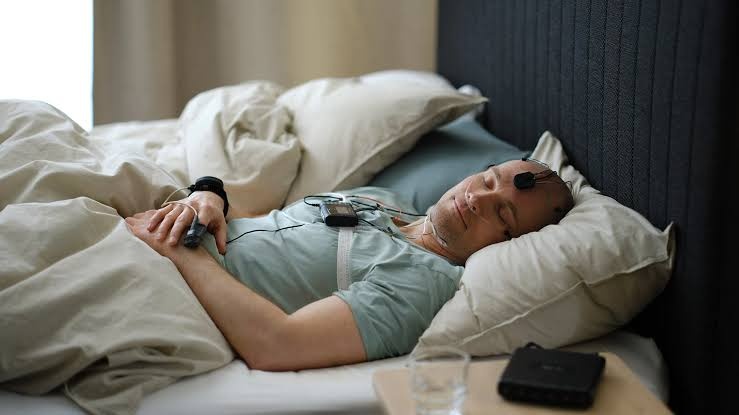
Once you have been shown how to use the equipment, you take it home and sleep in your usual environment. You generally attach the monitoring equipment according to the instructions before going to bed.
It is normal to be aware of the equipment initially. However, the purpose is to collect information during your normal sleep period. If you wake during the night, follow the instructions provided rather than removing the equipment unless necessary.
What Happens During a Laboratory Sleep Study?
A laboratory sleep study takes place overnight in a supervised clinical environment. It may be recommended when a more detailed assessment is required or when additional monitoring is clinically appropriate.
At Coastal Respiratory & Sleep Specialists, laboratory sleep studies can provide supervised overnight assessment, including monitoring that may be required for more complex sleep-related breathing conditions.
Arriving at the Sleep Laboratory
You will usually arrive in the evening and be shown to your room or testing area. A sleep technician will explain the procedure and prepare the monitoring equipment.
Sensors may be placed on different parts of the body to record information throughout the night. Although the setup can involve several sensors, the purpose is to collect objective information about your sleep and breathing.
The technician will explain what you need to do before going to sleep and will remain available during the study if assistance is required.
What Is Monitored Overnight?
The measurements collected depend on the type of laboratory study. A comprehensive study can provide information about breathing, oxygen levels, sleep stages and other physiological changes.
Depending on the investigation, monitoring may include:
- Brain activity associated with sleep stages
- Breathing and airflow
- Oxygen saturation
- Heart rate
- Body and limb movements
- Sleep position
- Carbon dioxide levels when clinically indicated
Laboratory testing can therefore provide a more detailed picture when a home study is not sufficient for the clinical question being investigated.
What Happens After a Sleep Study?
After a home study, the equipment is returned to the clinic so the recorded data can be uploaded and analysed. A Sleep Scientist may analyse the data before it is reviewed by a Sleep Physician, who prepares a report and recommends appropriate next steps based on the findings.
After a laboratory study, the recorded information is similarly reviewed and interpreted. The results are considered alongside your symptoms, medical history and other available clinical information.
Understanding Your Results
A sleep study does not simply provide a single number. The findings can contain multiple measurements that need to be interpreted in context.
Your results may help determine whether there is evidence of:
- Obstructive sleep apnoea
- Other sleep-related breathing disorders
- Abnormal oxygen levels during sleep
- Hypoventilation or carbon dioxide retention
- Other issues requiring additional assessment
The results can then guide the next stage of care. This may involve further testing, lifestyle recommendations, treatment or follow-up with a sleep physician.
If your results require specialist interpretation, arranging a sleep medicine consultation can provide an opportunity to discuss the findings and understand the recommended next steps.
Home Sleep Study vs Laboratory Sleep Study
Both home and laboratory studies can provide useful diagnostic information, but they are not interchangeable in every situation. The appropriate test depends on the patient’s symptoms, medical history and the level of monitoring required.
A home test may be suitable when the primary concern is a breathing-related sleep disorder and the clinical circumstances allow testing at home. A laboratory study may be preferred when more comprehensive or supervised monitoring is needed.
Which Sleep Study Is Right for You?
The decision should be made based on clinical assessment rather than convenience alone. Your GP or sleep physician can consider your symptoms and determine whether home or laboratory testing is appropriate.
A respiratory and sleep clinic on the Gold Coast can provide access to respiratory and sleep medicine services, including specialist consultations and sleep testing. Coastal Respiratory & Sleep Specialists provides testing at home and in an overnight sleep laboratory.
What Conditions Can a Sleep Study Help Diagnose?
Sleep studies are commonly associated with obstructive sleep apnoea, but sleep testing can be used to investigate a broader range of sleep-related breathing concerns and non-respiratory sleep disorders such as parasomnias and movement disorders of sleep.
The information collected may help physicians assess conditions involving abnormal breathing, oxygen levels or ventilation during sleep. The specific test selected depends on the suspected condition and the information required.
Sleep-Related Breathing Conditions
Obstructive sleep apnoea occurs when the upper airway repeatedly narrows or becomes blocked during sleep. A sleep study can identify patterns of breathing interruption and associated changes in oxygen levels.
More complex respiratory conditions may require additional monitoring. For example, Coastal Respiratory & Sleep Specialists offers laboratory testing that can include transcutaneous carbon dioxide monitoring when assessment of hypoventilation or carbon dioxide retention is clinically indicated.
If symptoms involve both breathing and sleep, a respiratory and sleep clinic on the Gold Coast may be an appropriate setting for coordinated assessment.
A sleep study provides diagnostic information, but treatment decisions depend on the complete clinical picture. Your physician may recommend treatment based on the type and severity of the condition identified.
For obstructive sleep apnoea, management may include CPAP therapy, oral appliances, lifestyle measures or other treatments depending on the individual circumstances.
Follow-Up After Testing
Follow-up is an important part of the diagnostic process. Your specialist can explain what the results mean and whether additional investigation or treatment is required.
At Coastal Respiratory & Sleep Specialists, our services include specialist consultations and sleep testing. We can use the information from investigations to support an appropriate clinical management plan.
If you need to discuss your results or determine the next stage of assessment, a sleep medicine consultation may be appropriate.
How to Prepare for Better Sleep Study Results
A sleep study is intended to measure your sleep under representative conditions. Following the instructions provided by the clinical team can help ensure the equipment is used correctly and the required information is collected.
Practical Preparation Tips
Keep your preparation simple and follow the specific instructions given for your study. Useful steps may include:
- Maintain your usual sleep routine unless instructed otherwise.
- Follow all equipment instructions carefully.
- Tell the clinical team about relevant medications.
- Avoid making unnecessary changes to your normal bedtime routine.
- Ask for clarification if you are unsure how to use any monitoring equipment.
The aim is to collect useful clinical information while keeping the testing process as straightforward as possible.
Choosing a Respiratory and Sleep Clinic on the Gold Coast
Choosing the right clinical setting depends on the type of assessment you need. A respiratory and sleep clinic on the Gold Coast may provide access to specialist physicians who can assess both sleep-related and respiratory concerns.
Coastal Respiratory & Sleep Specialists brings together independent Respiratory and Sleep Physicians who consult from several locations across the Gold Coast. Services include specialist consultation, home sleep studies, laboratory sleep studies, respiratory assessment and lung function testing.
Specialist Assessment and Sleep Testing
A respiratory and sleep clinic on the Gold Coast can be particularly relevant when symptoms involve both nighttime breathing and daytime respiratory concerns. Specialist assessment can help determine whether a sleep study is required and which type of investigation is most suitable.
At Coastal Respiratory & Sleep Specialists, we provide consultations at locations including Pimpama, Tugun, Benowa and Southport, with telehealth available for appropriate consultations.
A respiratory and sleep clinic on the Gold Coast may also help coordinate further respiratory investigations when symptoms suggest that additional testing is needed.
Conclusion
A sleep study is an important diagnostic tool for investigating breathing and sleep-related conditions. Depending on the clinical situation, testing may take place at home or in a supervised laboratory. Both approaches collect objective information that can help a physician understand what happens during sleep.
Before testing, you will receive instructions about the equipment and preparation required. During the study, sensors monitor relevant physiological information. Afterward, the recorded data is analysed and reviewed so the results can be considered alongside your symptoms and medical history.
Coastal Respiratory & Sleep Specialists provides home and laboratory sleep studies as part of its respiratory and sleep medicine services. If you have persistent snoring, witnessed breathing pauses, nighttime gasping or unexplained daytime tiredness, discuss your symptoms with your GP and consider whether a respiratory and sleep clinic on the Gold Coast is appropriate for your assessment.
For information about available services or to arrange the next step in your care, you can request an appointment or enquiry with our team.
Frequently Asked Questions
1. Is a sleep study uncomfortable?
Most people can complete a sleep study without significant difficulty. A home study uses monitoring equipment that you wear overnight, while a laboratory study involves sensors attached to the body. The technician explains the equipment and its use before testing begins.
2. Can I sleep normally during a sleep study?
You are encouraged to follow your normal sleep routine as much as possible unless your clinical team provides different instructions. Some people are aware of the monitoring equipment initially, but the study is designed to collect information while you sleep.
3. How long does a sleep study take?
A home sleep study generally involves collecting equipment, using it overnight and returning it the following morning. A laboratory sleep study is typically conducted overnight. The exact schedule depends on the type of test and the clinical requirements.
4. What happens if my sleep study shows sleep apnoea?
Your results will be interpreted by a Sleep Physician alongside your symptoms and medical history. If sleep apnoea is identified, your physician can discuss appropriate management, which may include CPAP therapy or other treatment approaches depending on your individual circumstances.
5. Do I need a referral for a sleep study?
Referral requirements depend on the type of service and testing pathway. Coastal Respiratory & Sleep Specialists advises patients to obtain a referral from their GP or specialist. Referral information can also help the clinical team understand the reason for testing and relevant medical history.